

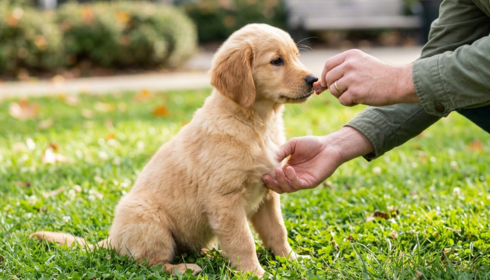
Real environment puppy obedience training is one of the most effective ways to build reliable behavior in young dogs because it moves learning beyond controlled spaces and into the real world where distractions actually exist. Instead of practicing commands only at home or in a quiet training room, puppies learn how to respond in parks,…
On this page
- Why Real environment puppy obedience training matters
- Core principles of real environment puppy obedience training
- Key skills developed through real environment puppy obedience training
- Common mistakes in real environment puppy obedience training
- Step-by-step approach to real environment puppy obedience training
- The role of environment in behavior development
- How professional trainers structure real-world training
- Benefits for long-term behavior stability
- Owner involvement and consistency
- When to start real environment puppy obedience training
- Final thoughts
Real environment puppy obedience training is one of the most effective ways to build reliable behavior in young dogs because it moves learning beyond controlled spaces and into the real world where distractions actually exist. Instead of practicing commands only at home or in a quiet training room, puppies learn how to respond in parks, sidewalks, neighborhoods, and busy environments where real-life behavior matters most.
For dog owners looking to raise confident, well-behaved companions, real environment puppy obedience training provides a structured bridge between basic obedience and real-world reliability. This approach is widely used by professional trainers, including Rob’s Dog Training, because it focuses on consistency, clarity, and gradual exposure to distractions that dogs will encounter for the rest of their lives.
Why Real environment puppy obedience training matters
Traditional obedience training often takes place in quiet, predictable environments. While this is useful for teaching foundational commands like sit, stay, and come, it does not fully prepare puppies for real-world distractions such as other dogs, people, noises, or movement.
Real environment puppy obedience training fills this gap by helping puppies:
- Generalize commands across different environments
- Build impulse control under distraction
- Develop confidence in unfamiliar settings
- Strengthen recall reliability outdoors
- Reduce fear-based or reactive behavior
Without this step, many puppies appear “trained” at home but struggle outside. This is where breakdowns in behavior typically occur.
Core principles of real environment puppy obedience training
Successful real-world training is not random exposure. It follows structured behavioral principles that ensure the puppy learns effectively instead of becoming overwhelmed.
1. Gradual exposure to distractions
Puppies are introduced to environments in increasing difficulty levels. For example:
- Quiet driveway or backyard
- Low-traffic park area
- Busier sidewalks or public parks
This helps prevent overstimulation while still building adaptability.
2. Reinforcement timing and clarity
Commands must be reinforced immediately when performed correctly. In real environments, timing becomes even more important due to competing distractions.
3. Short, focused training sessions
Puppies learn best in short bursts (5–15 minutes). Longer sessions in distracting environments can reduce focus and lead to frustration.
4. Consistency across handlers
Everyone interacting with the puppy should use the same commands, tone, and expectations. Inconsistency slows progress significantly.
Key skills developed through real environment puppy obedience training
Real-world obedience is not just about compliance it shapes long-term behavior patterns that affect a dog’s entire life.
Leash manners in public spaces
Puppies learn not to pull, lunge, or zigzag during walks. Instead, they develop controlled movement beside the handler even when distractions are present.
Reliable recall
One of the most critical skills, recall ensures the puppy returns when called even with competing stimuli like other dogs or food smells.
Impulse control
Puppies practice resisting sudden urges such as:
- Chasing moving objects
- Jumping on people
- Reacting to noises
Focus and engagement
Training reinforces the ability to maintain attention on the handler despite environmental distractions.
Common mistakes in real environment puppy obedience training
Many owners unintentionally slow progress by making predictable errors during training.
Overexposure too early
Taking a puppy into highly stimulating environments before they are ready can lead to fear, anxiety, or shutdown behavior.
Inconsistent reinforcement
Rewarding behavior sometimes but not always creates confusion and reduces reliability.
Expecting instant perfection
Real environment training is progressive. Puppies need repetition across multiple settings before behaviors become stable.
Skipping foundational obedience
Real-world training should build on basic skills already introduced in low-distraction environments.
Step-by-step approach to real environment puppy obedience training
A structured progression is essential for success. Below is a simplified training roadmap used by professionals.
Step 1: Foundation at home
Start with basic commands:
- Sit
- Down
- Stay
- Come
These are introduced in calm environments with minimal distractions.
Step 2: Controlled outdoor exposure
Move training to quiet outdoor areas such as:
- Backyard
- Driveway
- Empty park corners
Focus remains on reinforcement and engagement.
Step 3: Low-distraction public environments
Introduce mild distractions:
- Light pedestrian traffic
- Distant dogs or sounds
- Short leash walks
Commands should still be consistently followed.
Step 4: Moderate distraction environments
Gradually increase difficulty:
- Parks with other dogs
- Busier sidewalks
- Outdoor markets (at a distance initially)
Step 5: Real-world reliability testing
Once the puppy demonstrates consistency, training is tested in unpredictable environments while maintaining control and communication.
The role of environment in behavior development
Environmental psychology plays a major role in canine learning. Dogs do not generalize behavior automatically; they associate commands with specific contexts.
For example:
- A “sit” learned in the kitchen does not automatically transfer to a park
- A recall in a quiet yard may fail near strong distractions
Real environment puppy obedience training ensures these gaps are closed through repetition across multiple contexts.
How professional trainers structure real-world training
Professional programs like those offered by Rob’s Dog Training typically use a layered training model:
- Behavioral assessment (baseline evaluation)
- Controlled obedience reinforcement
- Structured distraction exposure
- Real-world scenario training
- Owner education and transfer training
This ensures that the owner, not just the trainer, becomes capable of maintaining the behavior long-term.
Benefits for long-term behavior stability
The long-term impact of real environment puppy obedience training is significant. Dogs trained in real-world conditions tend to show:
- Lower reactivity in public spaces
- Improved social behavior with other dogs
- Reduced anxiety in unfamiliar environments
- Better safety compliance (e.g., recall near hazards)
- Stronger bond with the owner due to trust and communication
These outcomes are especially important during adolescence, when many behavioral issues typically emerge.
Owner involvement and consistency
Training success depends heavily on owner participation. Even the best professional program will not be effective without follow-through.
Owners should:
- Practice daily in varied environments
- Reinforce good behavior consistently
- Avoid reinforcing unwanted behaviors unintentionally
- Keep sessions short and positive
Consistency is more important than intensity.
When to start real environment puppy obedience training
The ideal time to begin is as soon as basic vaccinations and veterinary clearance allow safe outdoor exposure. Puppies are highly receptive to learning between 8–16 weeks, making early structured exposure extremely valuable.
However, the process should always be gradual to avoid overwhelming the puppy.
Final thoughts
Real environment puppy obedience training is not just an advanced training method it is the bridge between basic obedience and real-world reliability. By systematically exposing puppies to real-life environments, owners can build behavior that holds up under distraction, pressure, and unpredictability.
With structured guidance, consistent practice, and professional support when needed, dogs can develop into confident, responsive companions in any environment. Programs offered by Rob’s Dog Training demonstrate how real-world exposure combined with disciplined reinforcement leads to long-lasting behavioral success.
For owners committed to raising stable, well-behaved dogs, this approach is one of the most effective investments in long-term canine behavior development.